This year we decided to venture off to Croatia. I did a little research beforehand but if I'm completely honest, probably not enough. Sometimes, perhaps, that’s a good thing. There is something rather wonderful about arriving somewhere without fully knowing what awaits you.
I knew I wanted to see Dubrovnik's Old Town. I love history, and this was firmly at the top of my list.
Nothing, however, prepared me for the moment I actually saw it.
Wow.
Did you know?
The Medieval plumbing dates back to 1296. Remarkably, the sewage system is still in use today.
I was completely mesmerised by the sheer size and scale of the Old Town. Standing there, surrounded by those enormous stone walls, it was difficult to comprehend that this wasn’t simply an ancient monument frozen in time. This had once been a city. People lived here, worked here, fell in love here, raised families here and went about their everyday lives, all within these walls.
And somehow, even today, that sense of life hasn’t disappeared.
The existing walls were constructed between the 13th and 17th centuries, although the first limestone fortifications around the city began towards the end of the 8th century. Built to protect Dubrovnik from the threat of foreign attacks, these imposing walls tell the story of a city that spent centuries defending its independence and its people.
Their strength was put to the ultimate test during the devastating earthquake of 1667. Much of the city was destroyed, yet the walls were largely unaffected - an extraordinary testament to the Renaissance craftsmanship of the Italian and Croatian architects and builders who worked on them.
Did you know?
One of Dubrovnik’s first pharmacies opened in 1317. Originally established to serve the monks and local residents, the historic pharmacy still operates today.
To really appreciate Dubrovnik, you have to go back much further. More than 1,300 years ago, refugees fleeing the nearby town of Epidaurum established a settlement on an island or cliff know as Laus. The Dubrovnik we know today looked very different.
There was no Stradun, no gleaming limestone promenade filled with cafés, restaurants and visitors. Instead, a shallow sea channel separated Laus from the Slavic settlements on the mainland. Then, in the 12th century, the channel was filled in, joining Laus with the mainland settlement and helping create the foundations of the Dubrovnik we see today.
Life would have been simple and demanding. Residents relied on fishing in the Adriatic Sea, gathering salt and cultivating tiny patches of rocky soil.
As you wander through the Old Town today, it’s fascinating to stop for a moment and imagine it.
No crowds.
No souvenir shops.
No cameras.
Did you know?
The Republic of Dubrovnik formally abolished slavery in the 15th century. This was centuries ahead of Great Britain, which abolished slavery in the 19th century.
Just the sound of the sea, the scrape of footsteps on stone and people living their lives behind these ancient walls.
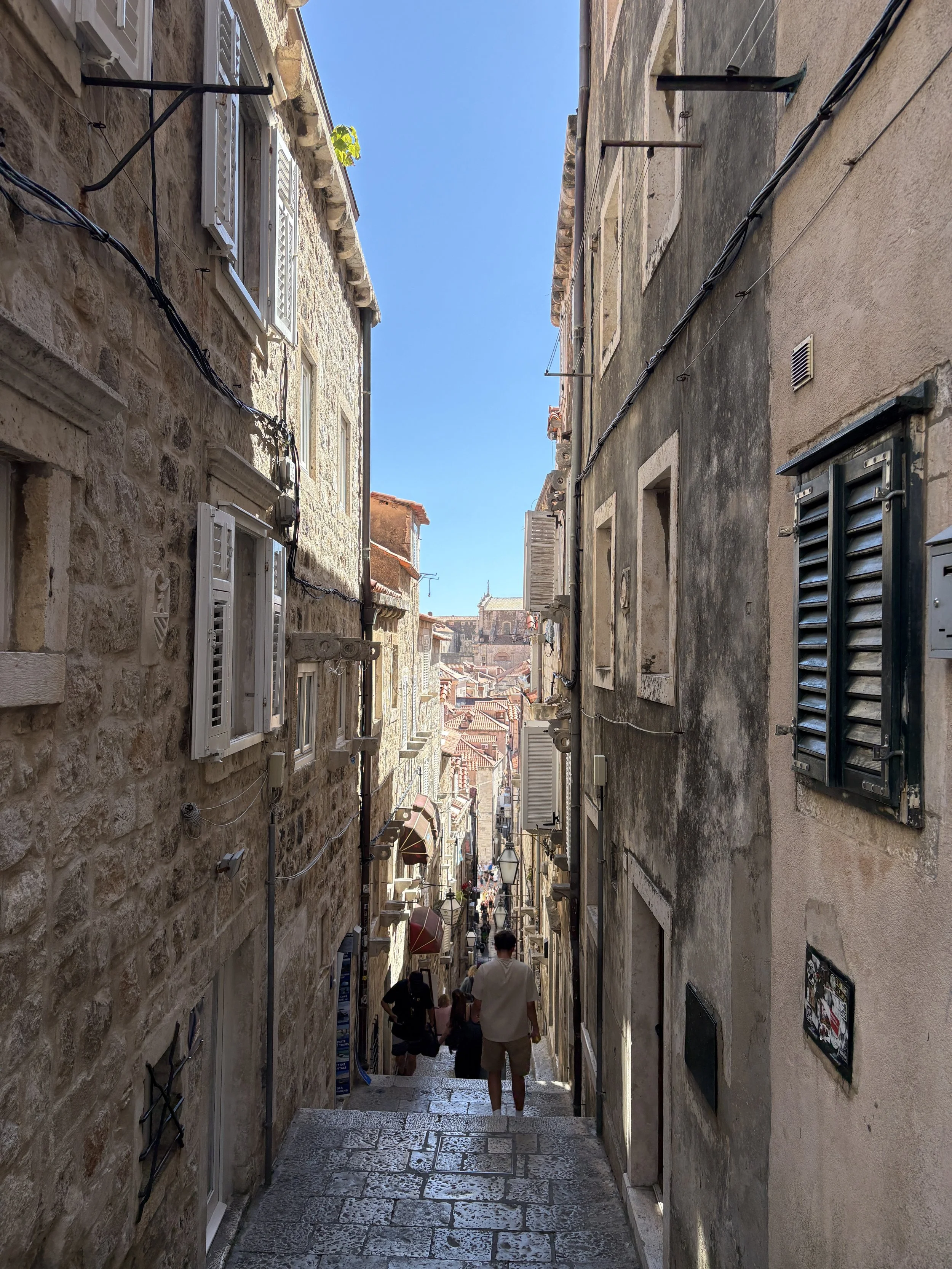
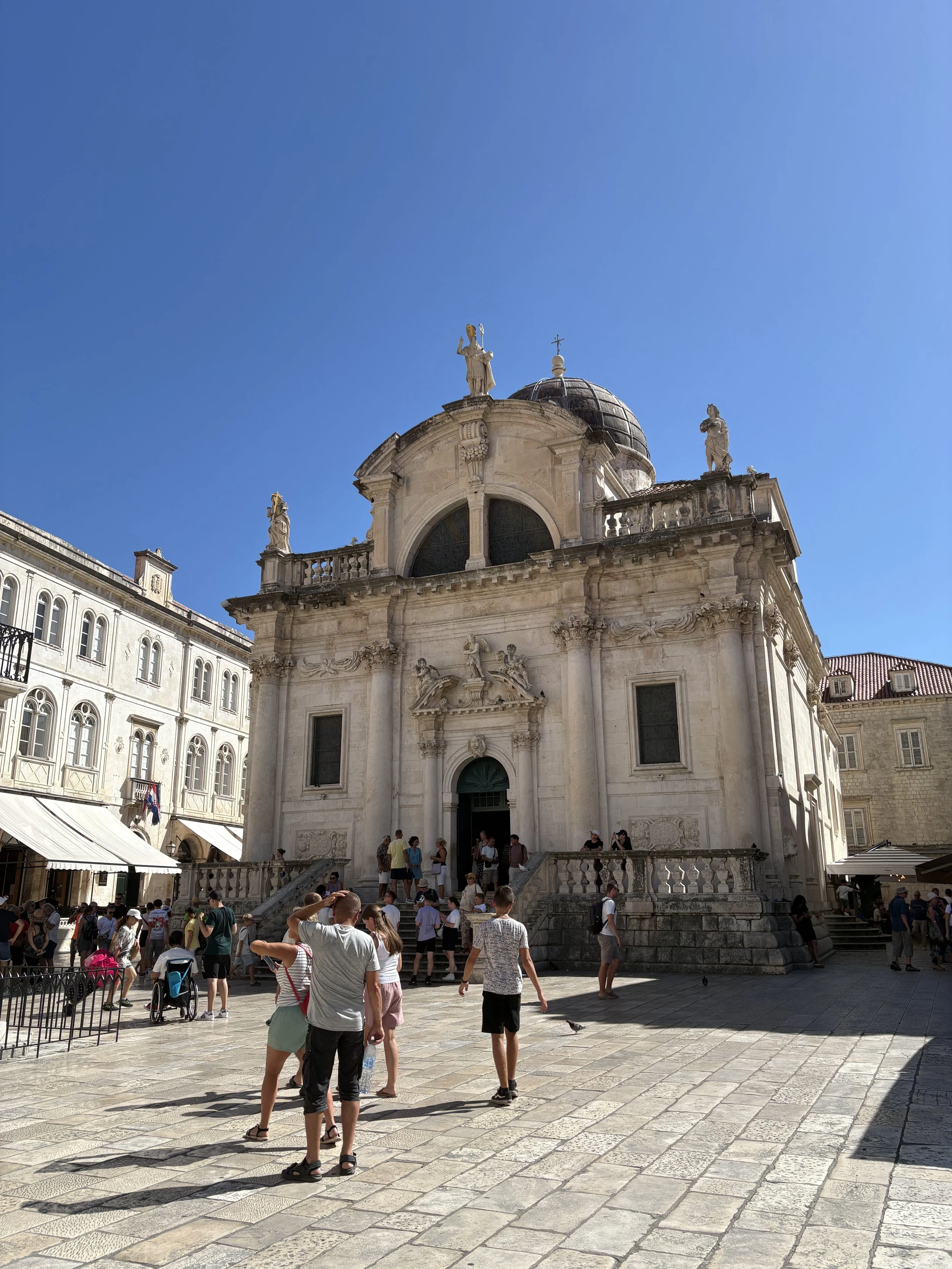
There is beauty everywhere you look. The limestone streets polished smooth by centuries of footsteps. Water fountains tucked into corners. Churches rising between the buildings. Restaurants and cafés spilling onto the streets.
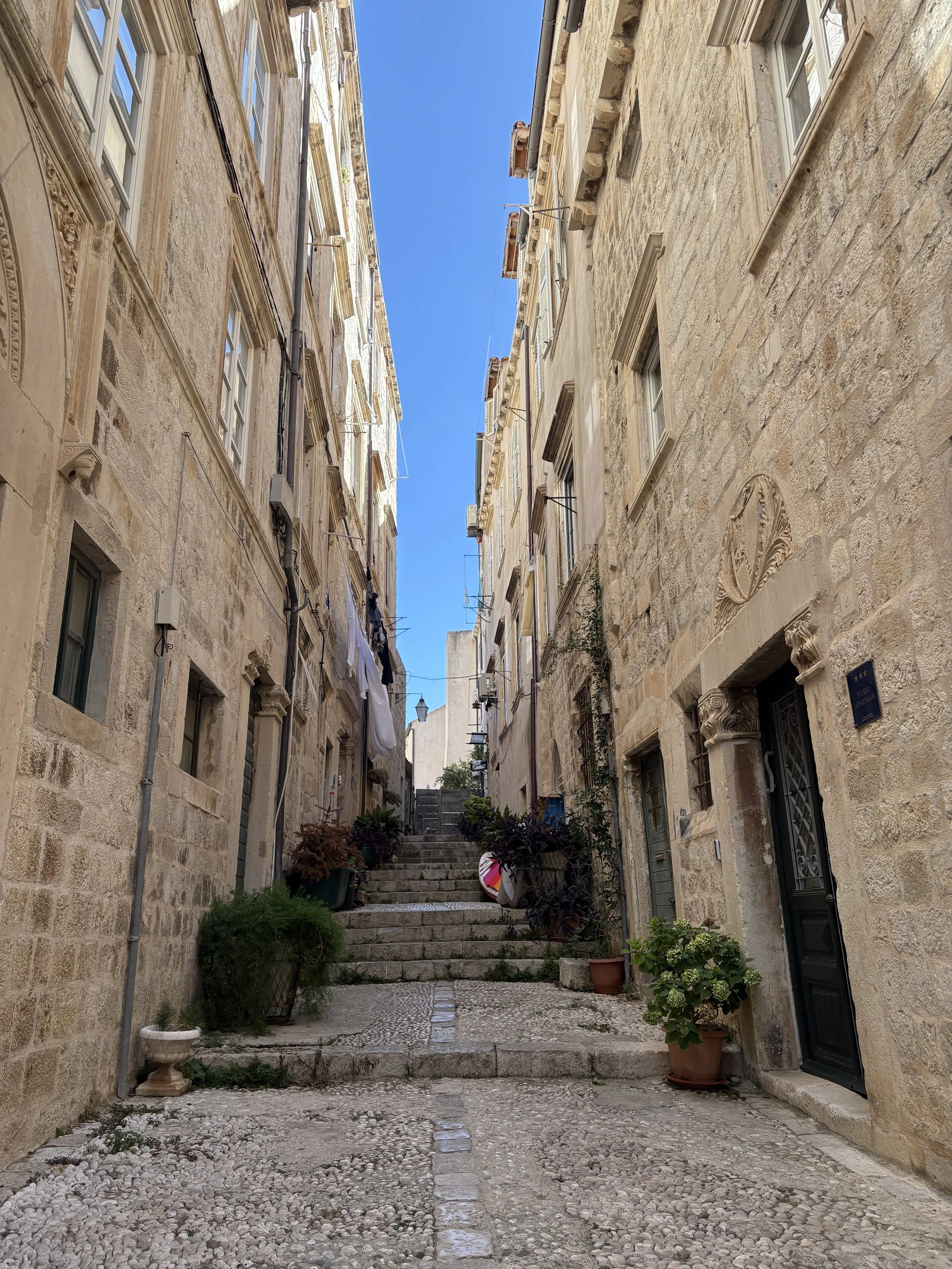
And stairs.
So many stairs!
The combination of modern life within ancient buildings is part of what makes Dubrovnik so captivating. Gift shops, restaurants and cafés occupy spaces that have been stood for centuries, surrounded by buildings that have witnessed generations come and go.
The limestone streets are beautiful, but they can also be slippery and uneven, so comfortable walking shoes are a must. What impressed me the most, though, was the effort being made to preserve this extraordinary place. There is still a huge amount of restoration work to be done, and it certainly isn’t a small undertaking. Dubrovnik's UNESCO World Heritage status, awarded in 1979, has helped support the ongoing preservation of the Old Town, along with the contribution of visitors from around the world.
Did you know?
There are an estimated 5,423 stone steps in Dubrovnik's Old Town, that’s not including the 1,080 steps to walk along Dubrovnik's City walls.
It's wonderful to see history being cared for rather than simply being left to crumble away. After all, once these buildings disappear, you can never truly replace them. Perhaps what fascinated me the most was discovering that Dubrovnik's Old Town isn't just a historic attraction.
People still live here.
Up to 1,500 permanent residents call these ancient streets home. For us, walking through Dubrovnik is an experience. For them, it is everyday life. There are countless stairs, which must make even the simplest daily tasks a challenge. You would certainly get your steps in if you lived here! Delivery trucks can only go as far as the city gates, and inside the walls there are only a handful of very small grocery shops.
Then there are the tourists.
Thousands of them.
The streets can become incredibly busy, and I couldn't help wondering what it must feel like to live here while people from all over the world wander in front of your door, photographing the streets, the buildings and sometimes even the smallest details of you everyday life.
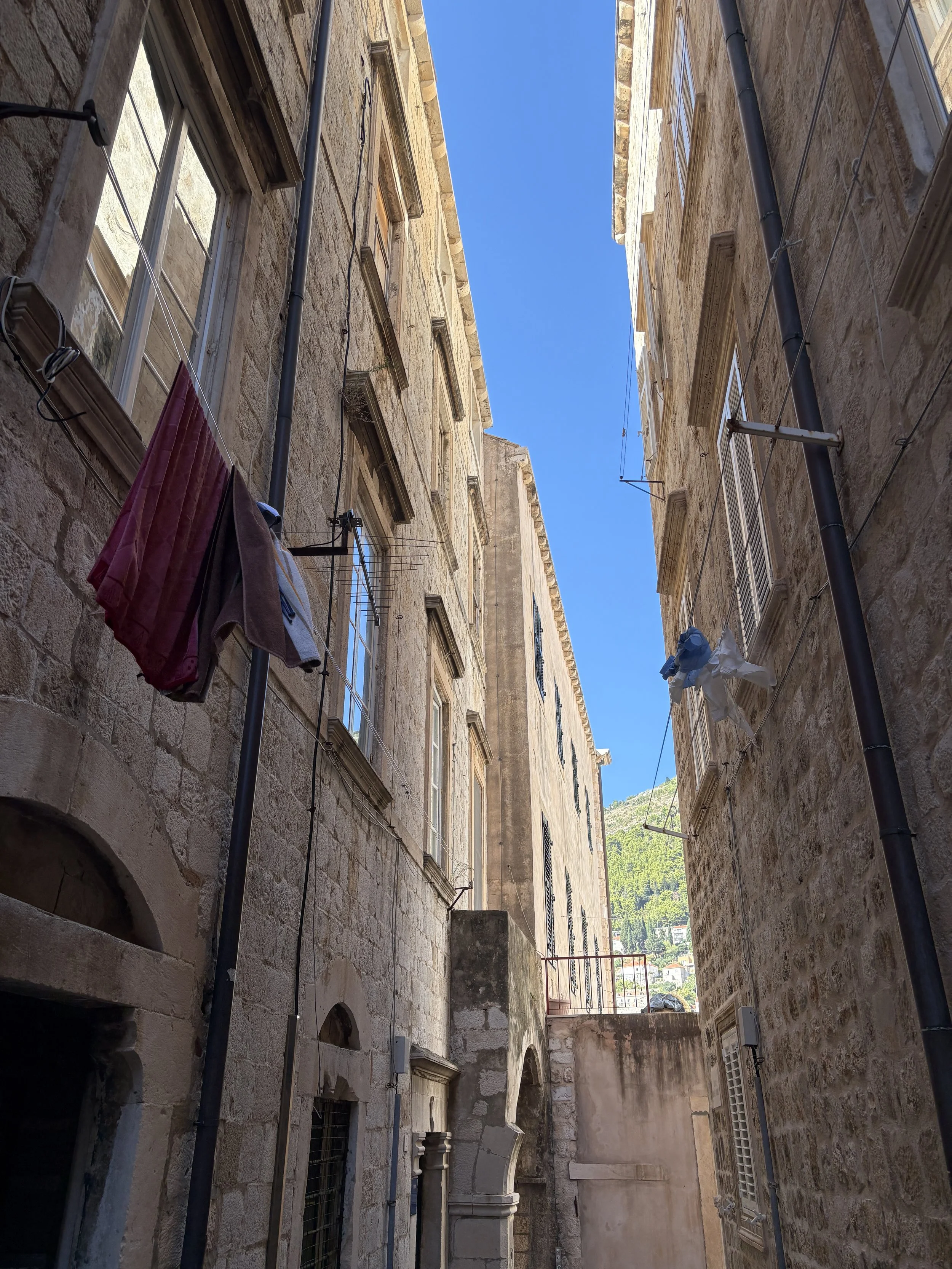
And yet, that is exactly what makes Dubrovnik so fascinating. Walk a little further and see washing hanging from a line between buildings. Plant pots sitting outside a doorway. A resident quietly sitting on their doorstep while streams of tourists pass by.
For us, these things are fascinating glimpses into another world.
For the people who live here, they are simply home.
Did you know?
One of the first orphanages was opened in Dubrovnik, 1432. It allowed mothers to leave their babies in secret to prevent the infants from being abandoned in the city.
This is where they made lifelong friendships. Where they had their first kiss. Where they experienced their first heartbreak. Where they played as children and created memories that will stay with them for the rest of their lives.
We see ancient buildings.
They see childhood.
We see history.
They see home.
There is almost something surreal about wandering through a place where the past and present exist side by side. I found it quite overwhelming at first. Not in a bad way, more because of the sheer scale, history and beauty of it. It’s impossible to take it in all at once.
We visited Dubrovnik's Old City on two consecutive days, taking our time and wandering through as many streets as we could. We wanted to see it all, and most importantly, we didn’t want to rush it. Don’t simply follow the crowds. Wander down the little streets. Look inside the doorways. Notice the washing hanging from the balconies. Watch the locals going about their day. Admire the buildings. Run your hands over the ancient stone.
Did you know?
An estimated 20,000 people died during the Croatian War of Independence from 1991-1995.
Try to imagine the thousands upon thousands of people who have walked these very streets before you. That is the magic of Dubrovnik.
A City shaped by history.
You aren’t simply visiting history.
For a brief moment, you are walking through it.
