Or should a more fitting title be, The Whydah Galley: A ship of stolen freedom!
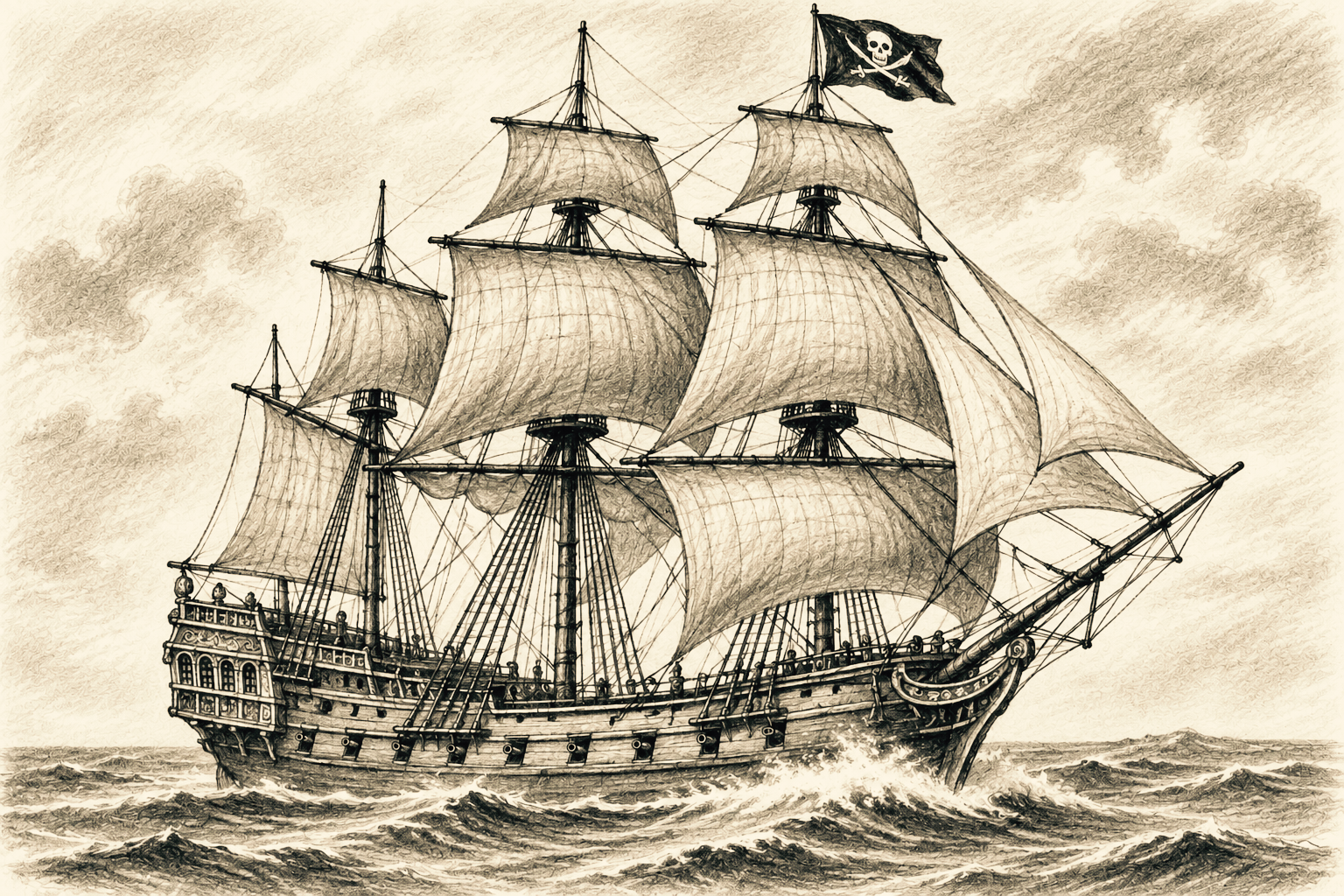
Imagine a ship sailing through the darkness off the coast of America. On board is a fortune in stolen gold, silver, coins, weapons and other treasures. Her decks are occupied by pirates who have spent months plundering ships across the Caribbean and Atlantic, taking whatever they can get their hands on.
We all love a good pirate story, don’t we?
We turn pirates into legends, celebrate their daring adventures and search the oceans for their lost treasures. We write books about them, make films about them and occasionally find ourselves admiring their rebellious spirit.
There’s something fascinating about the thought of a pirate ship sailing across the ocean, its crew living by their own rules, chasing adventure and fortune.
But history has a curious habit of deciding who deserves to be remembered.
And sometimes, when we look a little deeper, we discover a story that’s very different from the one we thought we knew.
This is the story of the Whydah Gally.
A ship that became famous for its pirates and lost treasure, but whose history began with something far more disturbing.
In 1717, two captains found themselves on opposite sides of an encounter that would become part of maritime history.
One was Captain Lawrence Prince, commander of a ship that had transported hundreds of enslaved Africans across the Atlantic.
The other was Samuel Bellamy, an English pirate who made his fortune by stealing ships and plundering their cargo.
One had participated in the trade of human lives. The other took what didn’t belong to him.
Neither was innocent.
And that’s what makes this particular maritime story so difficult for me.
We remember the names of the captain, the pirate and the men who discovered their treasures. Yet the names of hundreds of innocent people who suffered aboard this very ship have largely disappeared from history.
Their suffering was far greater than the loss of a ship or a fortune in stolen treasure.
And perhaps it’s their story we should remember most.
The Whydah Gally was built in London in 1715. She was an impressive vessel by the standards of her time, designed for speed, strength and the ability to transport valuable cargo across the Atlantic.
But what exactly was this valuable cargo?
Human beings!
In 1716, the Whydah sailed towards the western coast of Africa, where hundreds of enslaved African men, women and children were forced aboard.
These were people who had been taken from their homes and communities, separated from their families and stripped of something that every human being should have the right to enjoy.
Freedom.
Imagine standing on the shore, looking towards an unfamiliar ship, knowing you’re about to be taken somewhere you’ve never seen, with little hope of ever returning home.
Imagine the fear.
The confusion.
The unbearable uncertainty of not knowing what was going to happen to you or your loved ones.
And then imagine being forced below deck, surrounded by hundreds of other frightened people, all facing the same terrifying journey.
The conditions aboard slave ships were horrific. People were confined in overcrowded spaces, often with inadequate food, water and sanitation. Disease spread quickly, and violence was a constant threat.
The Whydah was no exception to the brutal system of the transatlantic slave trade.
Historical accounts differ over the exact number of enslaved Africans transported aboard her, but we know that hundreds were carried across the Atlantic to Jamaica.
Not everyone survived.
Some died during the crossing, never reaching the destination to which they had been forcibly taken.
And those who did survive?
They were sold into slavery.
It’s heartbreaking to imagine what those people endured. Having survived such a terrifying journey, they faced the prospect of spending the rest of their lives in captivity.
The ship’s owners and those involved in the trade stood to make a profit.
The people transported aboard paid a devastating price.
By February 1717, the Whydah was sailing through the Caribbean, preparing for her return across the Atlantic.
The enslaved Africans had already been sold, and the ship was now carrying valuable goods, including gold, silver and other commodities.
Then, on the horizon, another vessel appeared.
It belonged to Samuel Bellamy, better known as Black Sam Bellamy, an English pirate whose name would eventually become legendary.
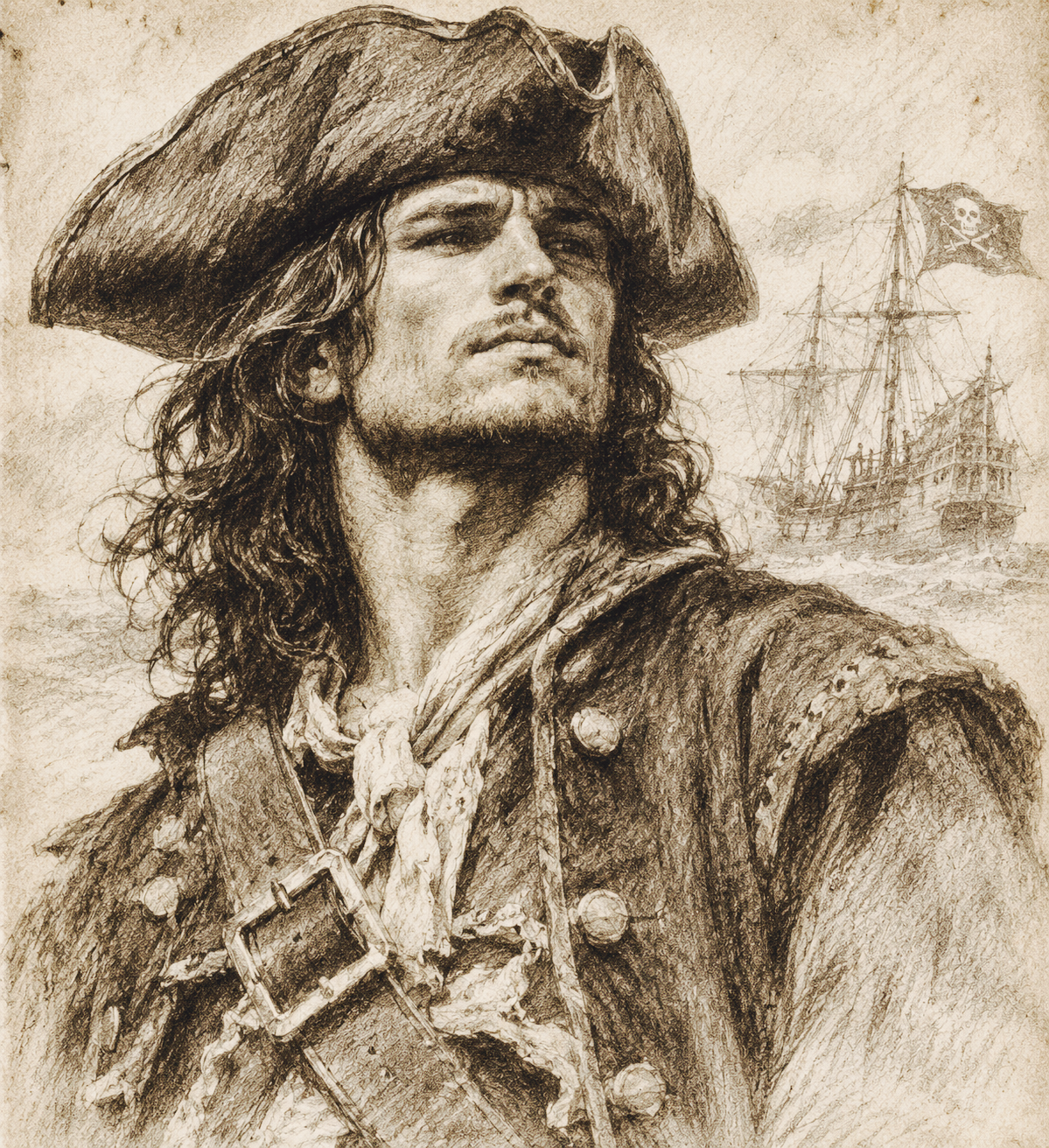
Bellamy had already established himself as a successful pirate, capturing merchant ships and taking their valuable cargo.
And now he had his eyes on the Whydah.
After pursuing the vessel, Bellamy captured her and took command.
Captain Lawrence Prince had lost his ship.
You might expect a pirate to show little mercy to the captain and crew of a captured vessel. After all, pirates weren’t exactly known for obeying the law!
But Bellamy reportedly allowed the captain to leave aboard another ship, the Sultana, and even provided him with some money.
It’s quite an extraordinary moment when you think about it.
Here was a captain who had participated in the transportation and sale of hundreds of human beings, being allowed to sail away with his freedom.
The people he had transported across the Atlantic had been given no such choice.
They couldn’t simply board another ship and sail home.
They couldn’t refuse their fate.
They had no freedom to begin with.
And what about Bellamy?
Was he any better?
It’s tempting to portray him as the hero of this encounter, particularly when we consider the horrific history of the ship he had just captured.
But Bellamy wasn’t there to rescue enslaved people or seek justice for those who had suffered.
He wanted the ship.
And he took it.
He would use that very same vessel to continue his life of piracy, stealing from other ships and accumulating a fortune.
Two captains, two very different lives, and two men whose actions caused harm to others.
Of course, stealing a ship and enslaving human beings were not crimes of equal suffering. The cruelty of the slave trade was on an entirely different scale.
Under Bellamy’s command, the Whydah became one of the most formidable pirate ships sailing the Atlantic.
Her cannons, speed and size made her an impressive vessel, and Bellamy continued his raids, adding to the treasure already aboard.
But his success would be short-lived.
On 26 April 1717, just a couple of months after Bellamy captured the Whydah, a violent storm swept across the coast of Massachusetts.
The ship was sailing near Cape Cod when fierce winds and enormous waves drove her towards dangerous sandbanks.
Imagine being aboard that night.
The wind howling through the rigging, waves crashing against the wooden hull and the crew desperately trying to keep their ship afloat.
The very vessel that had survived an Atlantic crossing carrying hundreds of enslaved people, followed by a pirate takeover, was now fighting for survival against the ocean itself.
And this time, there would be no escape for most of those aboard.
The Whydah struck a sandbar and began to break apart.
Bellamy and almost everyone aboard perished. Only two men from the Whydah are known to have survived.
The ship disappeared beneath the waves, taking a fortune in stolen treasure with her.
Captain Prince had escaped the pirates.
Bellamy had escaped the law for a time.
But neither his wealth nor his magnificent ship could save him from the Atlantic that night.
The ocean doesn’t choose sides.
And just like that, one of the most successful pirate careers in history came to an end.
For centuries, the Whydah remained hidden beneath the Atlantic.
Her story became part of pirate folklore. Tales of lost treasure, gold coins and a shipwreck somewhere off the coast of Massachusetts continued to capture people’s imaginations.
Then, in 1984, almost 270 years after she sank, American explorer Barry Clifford discovered the wreck off Cape Cod.
Can you imagine the excitement?
After centuries of searching and speculation, the remains of a genuine pirate ship had finally been found!
Gold, silver, coins, weapons and personal possessions began emerging from the seabed.
In 1985, a bronze bell bearing the inscription THE WHYDAH GALLY 1716 was recovered, confirming the identity of the shipwreck.
It was an extraordinary discovery.
The Whydah became the first conclusively identified Golden Age pirate shipwreck to be excavated.
A real pirate ship!
Real treasure!
And the possibility that even more was waiting to be discovered beneath the sand.
For historians and maritime enthusiasts, it was an incredible opportunity to learn more about piracy during the eighteenth century.
Just imagine the stories those objects could tell us.
The journeys they had taken, the hands they had passed through and the people who had once owned them.
But there’s something about this discovery that I can’t help thinking about.
Before the Whydah became a pirate ship, before Bellamy accumulated his fortune and before all that treasure disappeared beneath the waves, this very same vessel had carried hundreds of enslaved Africans.
And their lives had been changed forever.
When we hear about the discovery of the Whydah, we hear about the treasure.
We hear about Bellamy.
We hear about the shipwreck and the extraordinary work that went into finding her.
But what about the people who had been forced aboard before she became a pirate ship?
Where were their stories?
Where were their names?
We know the name of the captain.
We know the name of the pirate.
We know when the ship sank and where her treasure was eventually discovered.
Yet we know comparatively little about the hundreds of enslaved Africans whose lives were forever changed by that same vessel.
And that, for me, is one of the saddest parts of this entire story.
The men who commanded the Whydah became part of maritime history.
The people who suffered aboard her were too often reduced to numbers in the records of a trade that treated human beings as property.
We can admire the determination of the explorers who discovered the wreck. We can appreciate the historical importance of the artefacts recovered from the ocean floor.
And yes, we can still find pirate stories fascinating.
But we shouldn’t forget what happened aboard this ship long before the pirates arrived.
The Whydah’s greatest loss was never the treasure that sank beneath the waves. It was the freedom and lives taken from the people she carried long before she became a pirate ship.
There’s something deeply ironic about pirates celebrating their own freedom, rejecting authority and choosing to live by their own rules, while sailing aboard a vessel that had once carried hundreds of people who had been denied even the most basic freedom of all.
The freedom to decide what happened to their own lives.
More than three centuries have passed since the Whydah disappeared beneath the Atlantic, yet her story is far from over.
Archaeological work and research have continued since her discovery, and the objects recovered from the wreck are helping historians piece together more of her extraordinary past.
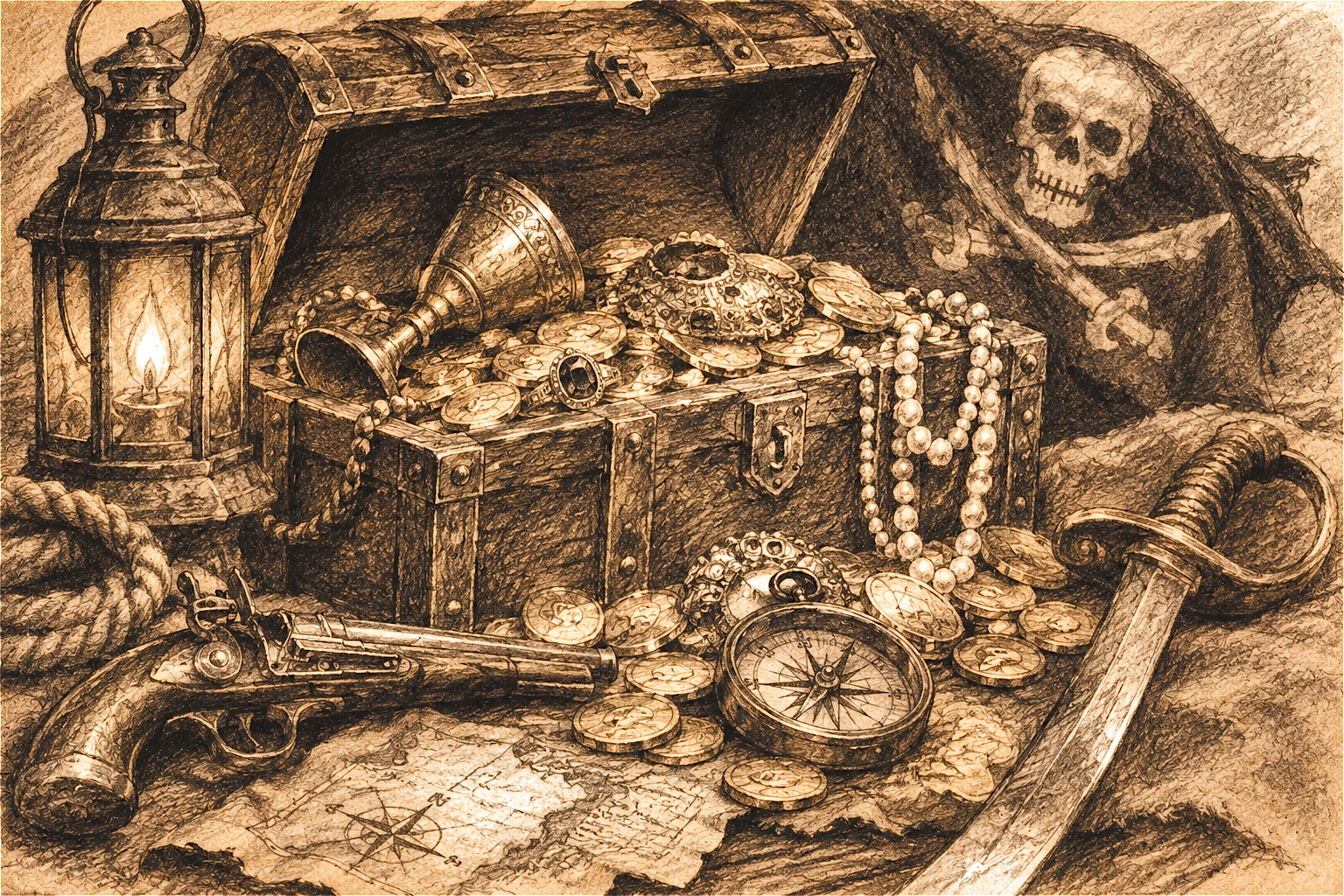
Every coin, weapon and personal possession has the potential to reveal something about the people who once sailed aboard her.
History isn’t simply about discovering what was lost.
It’s about understanding what happened, recognising the wrongs of the past and remembering the people whose stories deserve to be told.
Two captains became part of history.
One lost his ship.
The other lost his life.
But hundreds of innocent people had already lost something far more precious.
Their freedom.