Imagine standing on the waterfront of Stockholm on a warm August afternoon in 1628. The harbour is alive with excitement. Crowds gather along the quayside, eager to witness the departure of a magnificent new warship, a vessel built to display the might, wealth and ambition of Sweden’s king.
Her towering masts rise above the harbour, her wooden sculptures gleam with colour, and her cannons stand ready. She is a sight to behold. A symbol of royal power. A masterpiece of craftsmanship.
Yet, within minutes, this magnificent ship will be lying at the bottom of the harbour.
This is the extraordinary story of the Vasa.

In 1625, King Gustav II Adolf of Sweden ordered the construction of four new warships, including the vessel that would become known as the Vasa. Sweden was a rising military power, engaged in conflicts across Europe, and the king wanted a navy capable of striking fear into his enemies.
But he wanted more than a powerful fighting ship. He wanted something spectacular.
The Vasa was to be one of the most formidable warships in the Baltic, a floating declaration of Sweden’s strength and the king’s authority. Every detail was intended to impress, from the hundreds of elaborate sculptures adorning her hull to the formidable array of bronze cannons she would carry.
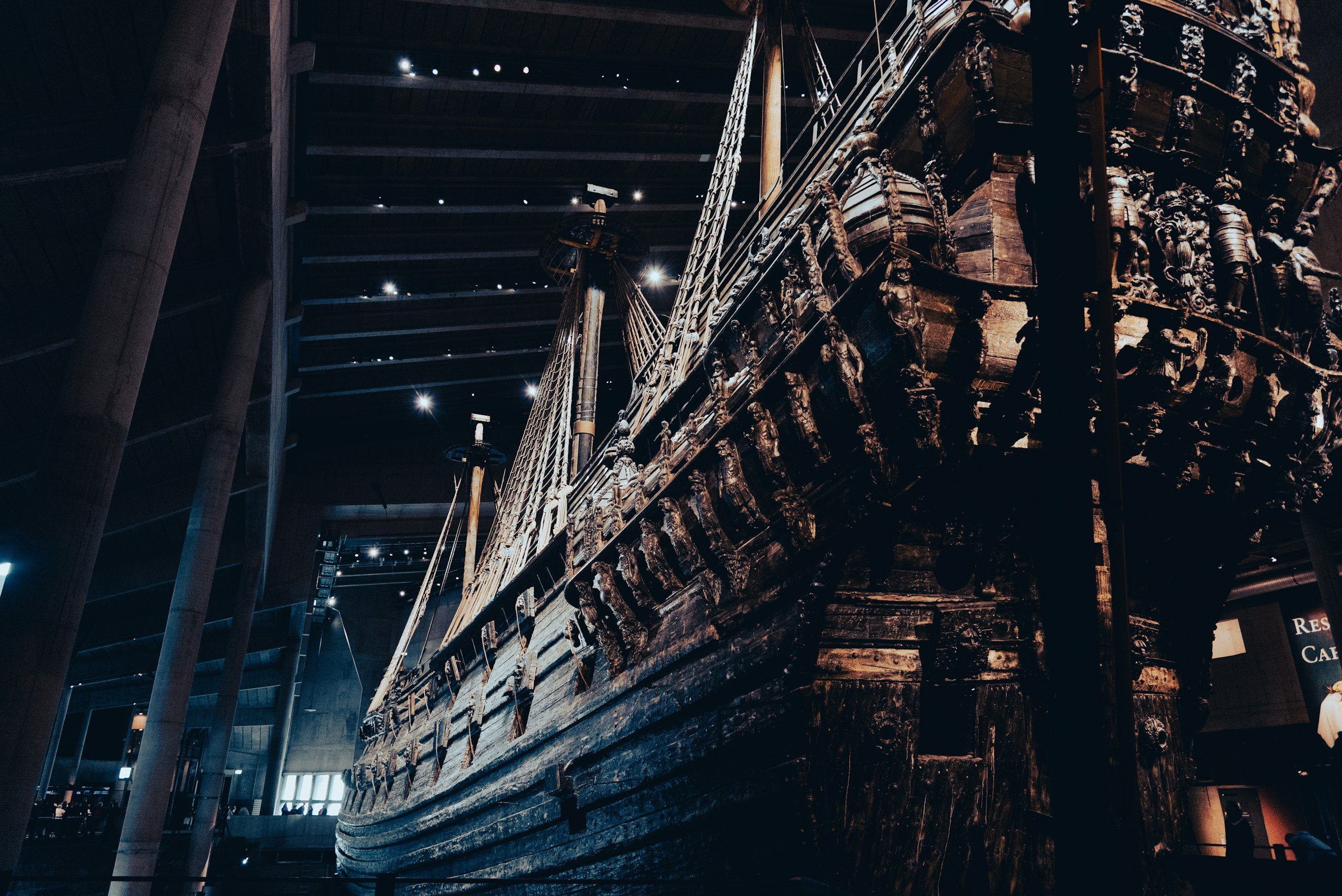
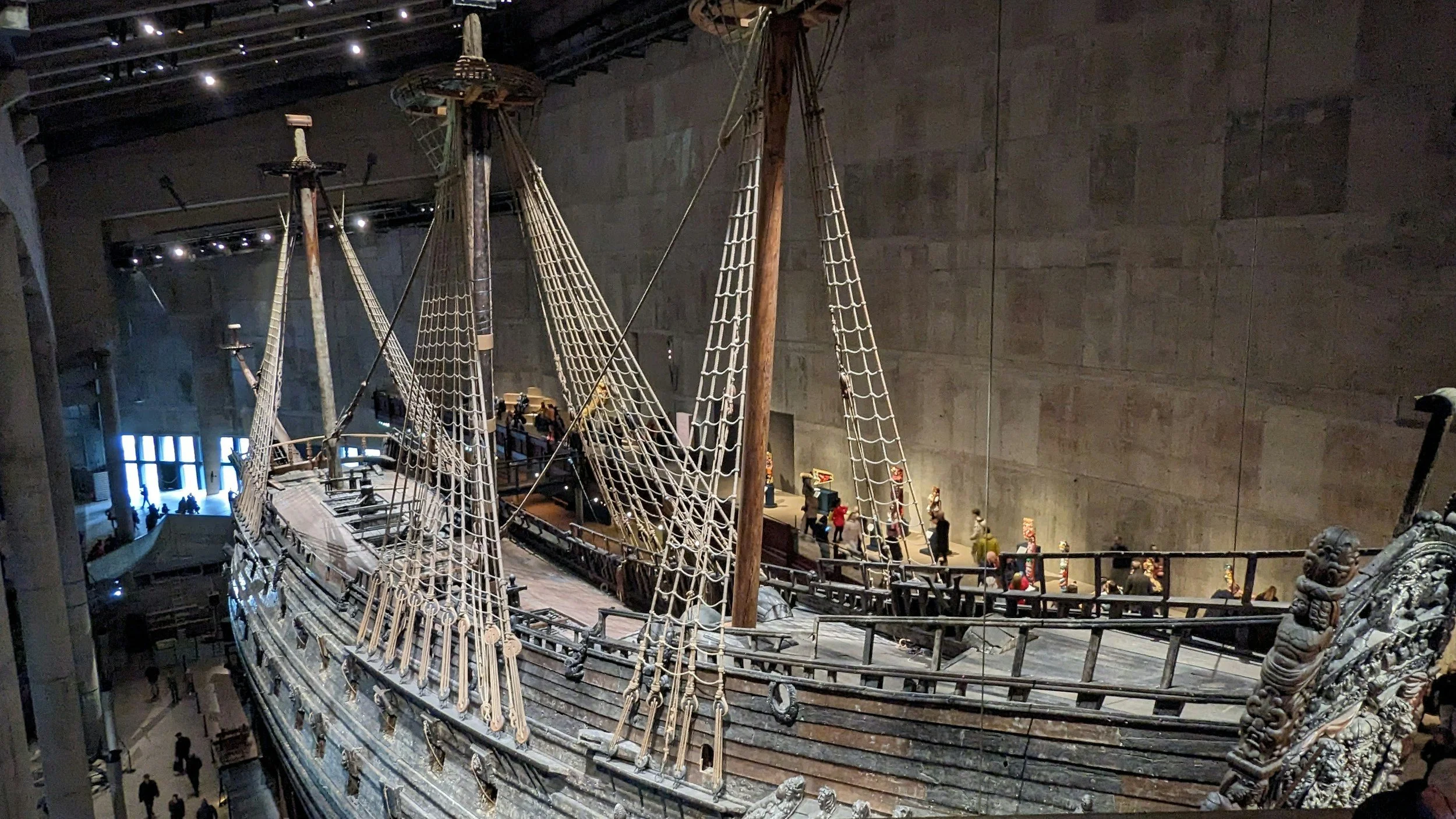
Measuring approximately 69 metres in length and rising more than 50 metres from her keel to the top of her mainmast, the Vasa was an enormous undertaking. Once fully fitted out, she weighed an estimated 1,200 tonnes and carried ten sails and 64 cannons arranged across two gun decks.
Hundreds of craftspeople worked to bring her to life. Skilled shipwrights shaped the timber, sculptors carved intricate figures, and painters added colour and decoration to the elaborate wooden ornaments. This was no ordinary warship. She was intended to be a floating work of art, a vessel whose very appearance proclaimed the glory of Sweden.
But beneath all that beauty lay a dangerous flaw.
The Vasa was too top-heavy. Her tall structure, heavy upper works and powerful armament left her dangerously unstable. The very features that made her so impressive were also contributing to her downfall.
And yet, as construction neared completion, the pressure to get her to sea continued to mount.
By the summer of 1628, concerns about the Vasa’s stability had become impossible to overlook.
The ship’s captain, Söfring Hansson, was worried. He knew something was wrong and wanted his concerns taken seriously. A vessel of this size and importance could not simply be sent into open water without confidence that she would remain upright.
A test was arranged in the presence of Vice Admiral Klas Fleming.
Thirty men were instructed to run from one side of the deck to the other, making the ship rock from side to side. It was a simple but revealing test, intended to demonstrate how she responded to movement.
The results were alarming.
After only a few crossings, the Vasa rolled so violently that the test had to be stopped for fear she might capsize even while moored.
Just imagine the unease among those who witnessed it. This was supposed to be one of Sweden’s greatest naval achievements, yet she could barely tolerate thirty men running across her deck.
Surely, the maiden voyage would have to be postponed?
Surely, someone would insist that the problems be corrected before lives were put at risk?
The king was away conducting a military campaign, and he had made his expectations clear. The Vasa was to be completed and sent to sea.
The pressure on those responsible was immense. Admiral Fleming had witnessed the failed stability test, but the king’s wishes carried enormous weight. The shipwrights maintained that they had followed the approved design, and there was no straightforward way to resolve the ship’s instability without major changes.
The warning signs were there. The danger had been demonstrated.
And still, the Vasa was allowed to sail.
On 10 August 1628, Stockholm’s waterfront filled with spectators eager to witness the departure of the magnificent new warship. It was a Sunday, and the atmosphere was festive. Families gathered to watch, small boats dotted the harbour, and the Vasa prepared to leave her moorings beneath the royal castle.
Among those aboard were sailors, invited guests and family members, including women and children who were expected to disembark later in the journey.
I can only imagine the excitement. After years of work, the great ship was finally ready to show the world what Sweden had built.
The Vasa eased away from the quayside. Four sails were set, catching the breeze, while her cannons fired a ceremonial salute as she began her first voyage through Stockholm harbour.
For a brief moment, she must have looked every inch the magnificent warship her king had envisioned.
Her sails filled. Her carved figures stood proudly above the water. The crowds watched as she moved away from the shore.
But beneath the celebration, a disaster was already waiting to unfold.
As the Vasa entered more exposed waters, a gust of wind caught her sails. The great vessel heeled over to one side, then recovered. For a moment, it seemed she might continue safely.
Then another gust struck.
The ship leaned dangerously, and water began pouring through the open gunports along her lower gun deck.
With water flooding into the hull, the Vasa could not right herself. Her heavy upper structure and inadequate stability left her unable to recover.
Within minutes of setting sail, the mighty warship was sinking.
Imagine the horror on the waterfront. Moments earlier, people had watched with pride and excitement as Sweden’s newest naval treasure slipped into the harbour. Now, those same spectators were witnessing a catastrophe.
The ship that had been built to demonstrate royal power was disappearing beneath the water, taking members of her crew and passengers with her.
The Vasa had travelled only around 1,300 metres from her starting point.
She had barely begun her maiden voyage.
And it was already over.
Around 30 people are believed to have lost their lives, although the exact number remains uncertain. Others managed to escape or were rescued from the water.
For the families who watched the disaster unfold, this was no mere military failure. It was a human tragedy, played out in full view of the city.
The Vasa had been designed to inspire awe and fear in Sweden’s enemies. Instead, she had become a national embarrassment in the space of minutes.
News of the disaster eventually reached King Gustav II Adolf, who was away on campaign. The king demanded an investigation into how such a catastrophe could have occurred.
The subsequent inquiry questioned those involved in the ship’s construction and operation. The evidence pointed towards the vessel’s fundamental instability, and witnesses described the alarming test that had taken place before her departure.
The shipbuilders maintained that they had followed the dimensions approved by the king. The investigation exposed the difficulties of determining responsibility in a project where royal demands, construction decisions and naval authority were closely intertwined.
But nobody was formally punished for the disaster.
It is tempting to ask whether the king himself was ultimately responsible. After all, he had approved the design and was pressing for the ship to be completed and sent to sea. Did those around him feel unable to challenge his wishes, even when they recognised the danger?
We cannot know precisely what every individual was thinking, and the disaster cannot be attributed to one decision alone. The Vasa was the product of a complicated construction process, limited contemporary understanding of ship stability, and a failure to act on clear warning signs.
Yet the uncomfortable question remains: if the people responsible had felt able to stop the voyage, could the tragedy have been avoided?
The inquiry brought no clear resolution, and the Vasa sank into history as a costly lesson in what can happen when ambition outweighs caution.
The Vasa lay on the seabed of Stockholm harbour, where her story might have ended.
During the 1660s, divers using primitive diving bells succeeded in recovering many of her valuable bronze cannons. It was an impressive achievement, considering the technology available at the time.
But raising the entire ship was another matter altogether.
The wooden hull remained below, resting in the dark waters of the Baltic. Years turned into decades, and decades into centuries. The memory of the wreck’s exact location faded, while the world above continued to change.
Imagine the great vessel lying silently beneath the harbour, her carved figures hidden from the sunlight, her decks empty, and her once-proud masts no longer rising above the water.
The Vasa had been built to make history.
Instead, for more than three centuries, she remained a secret beneath the sea.
And yet, the Baltic held on to her.
The relatively cold, low-salinity waters helped preserve the wooden vessel, protecting her from the shipworm that destroys timber in many warmer seas. While the Vasa lay in darkness, much of her structure survived.
Then, in the twentieth century, someone began searching for her.
Anders Franzén, a Swedish engineer with a passion for maritime history, became fascinated by the possibility that the Vasa might still be lying beneath Stockholm’s waters.
For years, he researched historical records and searched the seabed, determined to locate the long-lost warship.
In 1956, his efforts paid off.
Franzén found evidence of the wreck, and subsequent investigations confirmed that the remarkable vessel had survived in far better condition than anyone might have expected.
Can you imagine the excitement as divers explored the wreck and realised what they had found? This was not simply a few scattered timbers or the remains of an old ship. It was a remarkably preserved seventeenth-century warship, still holding the secrets of the people who had built, sailed and lost her.
But discovering the Vasa was only the beginning.
How could anyone raise such an enormous vessel after more than 300 years beneath the water?
The task would require extraordinary patience, ingenuity and engineering skill.
Divers worked to clear mud from around the hull and prepare the wreck for recovery. Cables were carefully passed beneath the ship, allowing it to be lifted and moved gradually into shallower water with the help of pontoons.
It was delicate work. The timber had survived for centuries, but any attempt to raise the vessel had to be carried out with enormous care. One mistake could damage a treasure that had remained hidden for generations.
Slowly, painstakingly, the preparations continued.
Then came the moment everyone had been waiting for.
On 24 April 1961, after 333 years beneath the surface, the Vasa emerged into daylight once more.
Just imagine standing there as the dark water parted and the great wooden hull began to appear. A ship that had vanished almost as quickly as she had sailed was returning to the world, bringing with her an extraordinary piece of Sweden’s past.
It must have been an unforgettable sight.
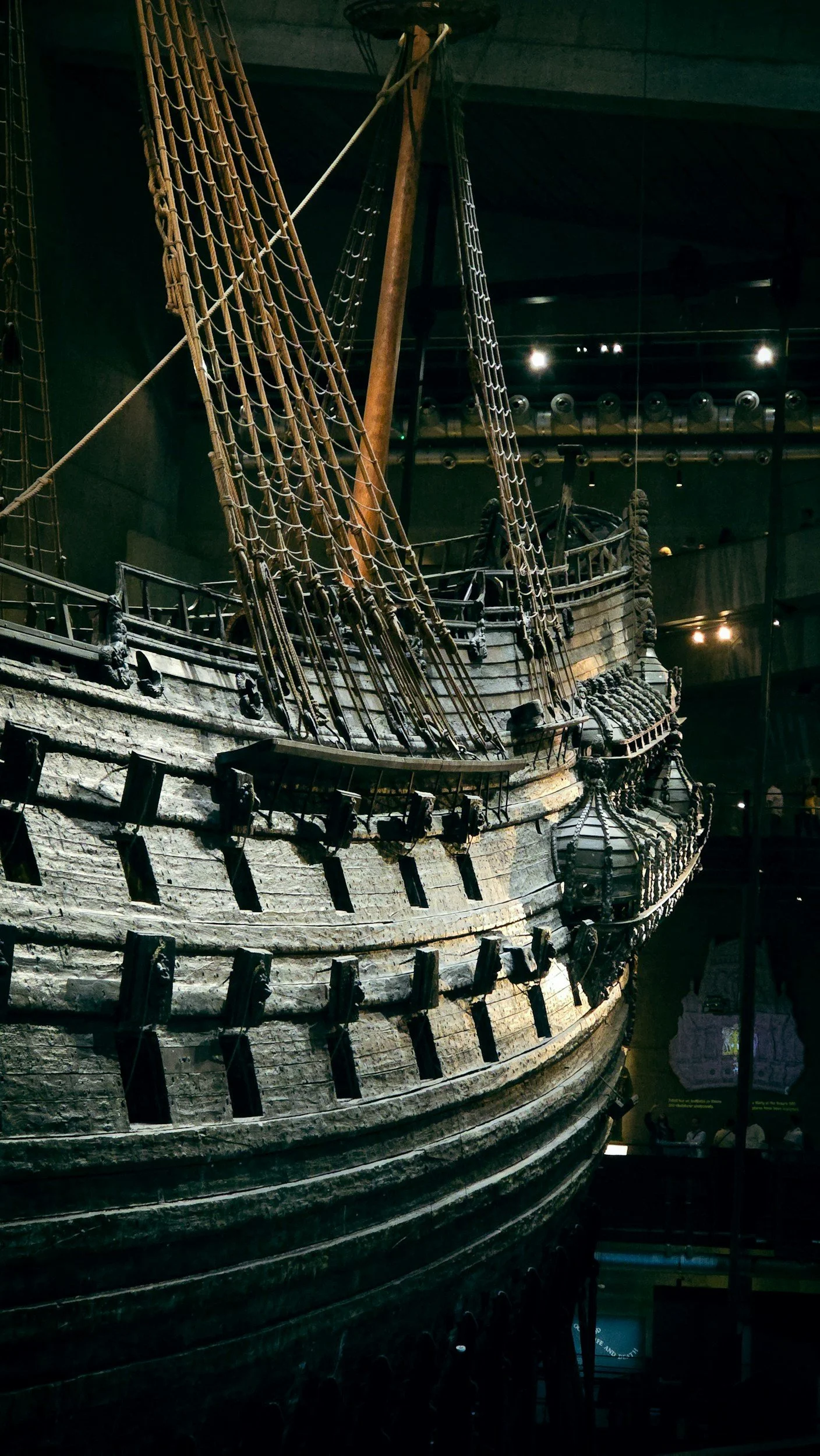
The carved sculptures, the timber framework and the sheer scale of the vessel revealed just how magnificent she had been. For those watching, this was more than a successful salvage operation. It was history rising from the depths.
The Vasa had survived.
And she had an incredible story to tell.
As archaeologists explored the wreck and the surrounding seabed, they recovered tens of thousands of objects. Personal belongings, tools, weapons, food remains and other everyday items helped reveal the lives of those who had been aboard.
Even human remains offered important evidence about the people caught up in the disaster.
Together, these discoveries created an extraordinary time capsule of seventeenth-century life. The Vasa was no longer simply a failed warship. She was a window into another world, preserving details of life at sea that might otherwise have been lost forever.
Every object carried a fragment of the past. Every carving, tool and personal possession helped bring the story closer to us.
The ship that had once been a symbol of royal ambition had become one of the most remarkable archaeological discoveries in maritime history.
Today, the Vasa is housed in the Vasa Museum in Stockholm, where she can be seen in extraordinary detail. Approximately 98 per cent of the ship consists of original material, making her one of the best-preserved seventeenth-century ships in the world.
It is difficult not to be struck by the contrast between what she was meant to represent and what ultimately happened.
She was built to demonstrate the glory of a king and the strength of a nation. Her elaborate decorations, towering masts and formidable armament were intended to inspire admiration and fear.
Yet her maiden voyage lasted only minutes.
For King Gustav II Adolf, the sinking must have been a humiliating failure, a costly reminder that even the grandest ambitions can collapse when warnings go unheeded.
But history has a curious way of turning failure into something extraordinary.
The Vasa was never able to fulfil her intended role as a warship. She never sailed into battle or demonstrated her power against Sweden’s enemies. Instead, she spent centuries hidden beneath the water, quietly preserving a world that would otherwise have disappeared.
And now, hundreds of years later, people travel from across the globe to stand before her.
We marvel at her craftsmanship. We study her history. We imagine the excitement of that August afternoon, followed by the disbelief and terror as she slipped beneath the waves.
I wonder what the king would think if he could see her now. Would he still view the Vasa as an embarrassing failure, or would he be astonished that his ill-fated warship had become one of Sweden’s greatest historical treasures?
Perhaps that is the most remarkable part of her story.
The Vasa was built to proclaim the power of a king, but it is her failure that has ensured her place in history.
She sailed for mere minutes, lay hidden for 333 years, and has now spent decades revealing the secrets of her time.
Somewhere beneath Stockholm’s waters, a disaster became a discovery. A symbol of royal ambition became a lesson for generations. And a ship that was once destined to be forgotten became impossible to ignore.
The Vasa may have failed as a warship, but she succeeded in something far greater: surviving long enough for the world to remember her.
