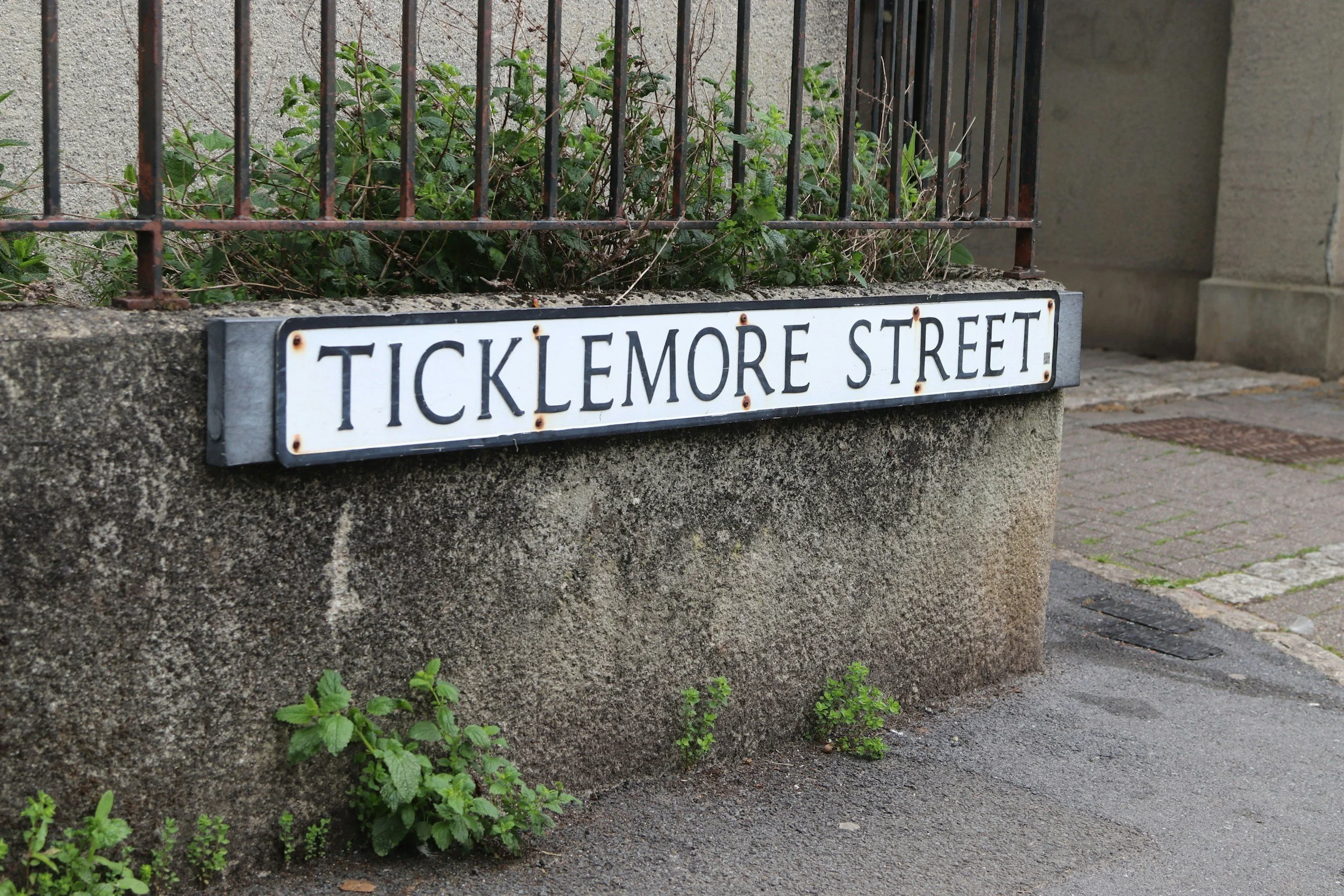
Ticklemore Street
Totnes, Devon
Have you ever walked down the same street hundreds of times without giving its name a second thought? Perhaps it commemorates a medieval market, a forgotten profession, a wealthy landowner, or even something that vanished centuries ago. Street names are little pieces of history hiding in plain sight, and most of us pass them by without ever wondering about their origins.
But then there are those names that make us stop in our tracks, look twice, and read them again. Sometimes we laugh, sometimes we question whether someone has made a mistake, and occasionally we wonder how on earth a name like that ever made it onto a street sign!
And once the initial laughter has died down, one very important question remains…
Why on earth would anyone name a street that?!
Would you seriously consider buying a house on Slag Lane or Crotch Crescent? Perhaps the only consolation would be the possibility of a bargain property price! But would saving a few thousand pounds be worth having to announce your address every time you booked an appointment or ordered a takeaway.
Imagine sitting in a silent hospital waiting room when the receptionist asks you to confirm your address. Would you confidently announce that you live on Fanny Hands Lane or Jackass Lane? I’m not sure I could manage it without laughing! On the bright side, you might just brighten someone’s otherwise rather ordinary working day.
Britain has some wonderfully peculiar street names, and behind many of them lies a story far more interesting than the name itself suggests. Some have roots stretching back to medieval times, others are the result of changing language, and a few have histories that are much less scandalous than they first appear.
So, let’s take a little wander through four of my favourite streets and discover the stories hiding behind their most unusual names.
1. Whip-Ma-Whop-Ma-Gate, York
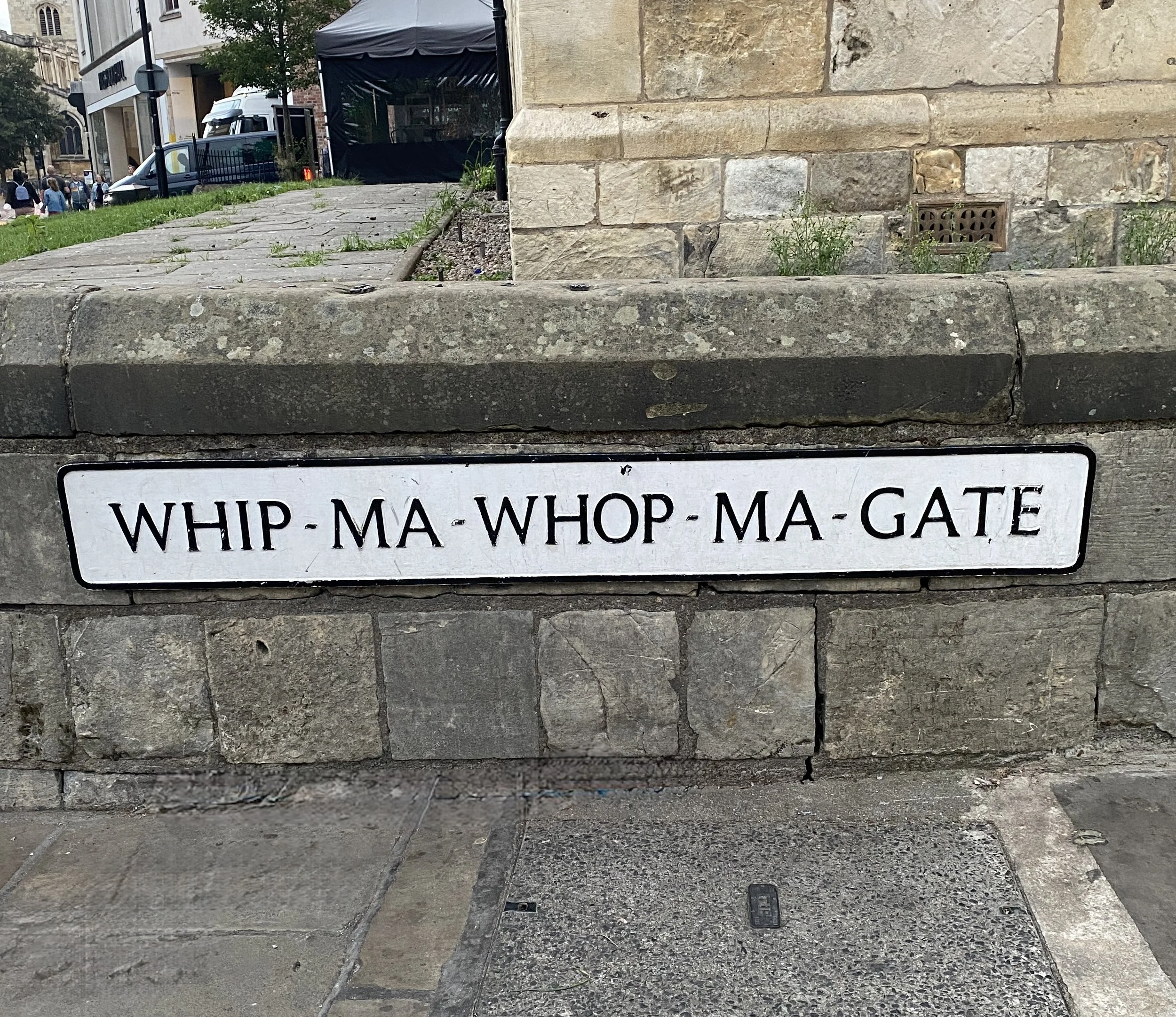
Whip-Ma-Whop-Ma-Gate
York
I love York! It’s famous for its Roman remains, Viking heritage and medieval streets, but it also boasts one of Britain’s most baffling street names: Whip-Ma-Whop-Ma-Gate.
It’s a tiny street with a name that seems to go on forever. And naturally, a name like that has attracted plenty of speculation over the years.
One of the earliest recorded forms dates back to 1505, when it appeared as Whitnourwhatnourgate. Not quite as catchy, is it?
York, once known to the Vikings as Jórvík, has a history stretching back well over a thousand years. It’s hardly surprising, then, that its street names have become tangled up with old dialects, local traditions and stories passed down through generations.
One popular explanation suggests the name refers to small, yapping dogs called whappets, which were supposedly whipped in the street. Other tales have linked the name to medieval punishments and public humiliation. Fascinating stories, certainly, but there is little reliable evidence to establish them as the true origin.
A more convincing explanation comes from the language of the past. The name is generally understood to have developed from an old expression meaning something along the lines of neither one thing nor another, or nothing much of anything.
Perhaps that was an apt description of this little stretch of road, although the precise origin remains debated.
Whatever the truth, Whip-Ma-Whop-Ma-Gate has become one of York’s most memorable landmarks. It proves that a street doesn’t need to be particularly long to leave a lasting impression!
2. Christmas Pie Avenue, Surrey
Now, this is a street name that sounds as though it belongs in a Christmas story.
Christmas Pie Avenue! You can almost imagine festive lights twinkling above the houses, the smell of freshly baked mince pies drifting from the kitchens, and someone preparing for a very traditional British Christmas.
Sadly, the name is not quite as festive as we might hope.
Its origins are generally linked to the historic hamlet of Christmas Pie in Surrey. Records from the early sixteenth century, during the reign of Henry VIII, refer to a family named Christmas associated with the area.
The word pie may also hold an important clue. It is thought to derive from an older English word, pightle or pightel, meaning a small enclosed piece of land or cultivated field.
Put the two together and the name may have originated from land associated with the Christmas family, perhaps a small field or enclosed plot known as Pie Field.
Over time, the surrounding area developed, and the name survived as the landscape changed from rural land into a residential settlement.
So, despite sounding like the perfect address for Father Christmas himself, Christmas Pie Avenue probably has more to do with old land boundaries and local families than anything you’d find on a festive dinner table.
Still, I can’t help thinking it would be a rather lovely address to receive a Christmas card from!
3. Sanitary Street, Manchester
From the festive to the downright practical!
Imagine telling someone you live on Sanitary Street. It doesn’t exactly conjure up images of picturesque cottages, does it? Yet the name has a fascinating connection to Manchester’s industrial past and the city’s efforts to improve the lives of its working-class residents.
During the nineteenth century, Ancoats became one of the great centres of Manchester’s cotton industry. Mills dominated the landscape, their chimneys filling the skyline, while workers arrived in their thousands in search of employment.
But behind the industrial success lay a much harsher reality. Housing was often overcrowded, drainage was poor, and access to clean water and adequate sanitation could be limited. In some properties, several families had to share basic facilities.
These conditions contributed to serious public-health problems, making the improvement of working-class housing an increasingly urgent issue.
By the late nineteenth century, Manchester Corporation was taking steps to replace some of the city’s worst housing with better accommodation. In 1897, a row of workers homes was built in Ancoats, providing residents with improved facilities, including their own water supplies and sinks, rather than relying on some of the shared arrangements common in older housing.
The street was named Sanitary Street, reflecting the importance of cleanliness, hygiene and better living conditions in an age when public health was becoming a major concern.
But while the name may once have represented progress, it eventually became a source of embarrassment for residents.
By December 1951, complaints had been made about people sniggering at the street’s name. Residents asked the council to change it, and the street eventually became known as Anita Street.
What began as a practical statement about better living conditions had become a name that residents no longer wanted to explain.
It’s a small but revealing piece of Manchester’s history. Behind one rather amusing street name lies a reminder of how far housing, sanitation and everyday life have changed.
4. Sluts Hole Lane, Norfolk
And now for a name that is guaranteed to make people look twice!
Sluts Hole Lane is the sort of street name that sounds as though it must have a scandalous story attached to it. You can almost imagine the rumours, whispered secrets and raised eyebrows that might have surrounded it.
But the real explanation may be considerably less dramatic.
One suggested origin is that the lane was once known as Slutch Hole Lane. The old word slutch referred to mud or slushy ground, making it a rather fitting description for a muddy lane in days when roads were far from the neat, well-drained surfaces we know today.
According to local accounts, the name may have changed over time, possibly through a spelling error or a misunderstanding when the name was recorded. The precise circumstances of the change, however, have not been conclusively established.
If this explanation is correct, the name has nothing to do with the modern meaning of the word sluts at all. Instead, it may simply describe the sort of muddy conditions travellers once had to endure.
It’s a reminder that language is constantly changing. Words that once had perfectly ordinary meanings can take on very different associations as the centuries pass.
The name attracted attention again in 1999, when residents sought a change. However, the proposed change was resisted, and the unusual name remained.
It’s easy to understand why people might want a more conventional address, but there is also something fascinating about preserving these peculiar remnants of the past.
After all, how many people can say they live on a street whose name sounds scandalous but may actually have started with nothing more exciting than a muddy patch of ground?
From a tiny medieval street in York to a muddy lane with a questionable reputation, these names remind us that history isn’t always found in museums, grand buildings or dusty archives.
Sometimes, it’s right beneath our feet.
A street name can preserve an old dialect, tell us about a family who once owned the land, reveal how people lived centuries ago, or offer a glimpse into the problems that shaped an entire community.
And sometimes, it can simply make us giggle like schoolchildren!
The next time you’re out and about, take a moment to look up at the street sign. That unusual name might have a fascinating story behind it, just waiting to be discovered.
And if you happen to stumble across a street called something even more ridiculous than these, please tell me about it. I’d love to know!
